SEO-Friendly Website Development!
Building a premium digital brand requires more than just aesthetics. We deliver a custom **website built for SEO** from the ground up, guaranteeing optimal performance, semantic structure, and indexability for long-term organic growth.

Why Technical SEO Starts During Development!
Many agencies build a website first, then hire an SEO consultant to add tags, metadata, and write descriptions later. As an experienced **SEO website development company**, we know this approach fails to resolve deep code issues. Core SEO capability is baked into the initial layout files, database queries, and script stacks.
A high-performing website must be easily crawlable by search engine bots. Clean codebase layouts with shallow DOM structures enable bots to easily map page content. By eliminating unnecessary code bloat, optimizing render-blocking files, and routing requests efficiently, we ensure search engine spiders spend their crawl budget indexing your high-value pages, not resolving rendering bottlenecks.
Core Web Vitals & Speed Optimisation!
Google explicitly uses Core Web Vitals as critical ranking signals. If your pages shift visually while loading or take several seconds to render content, your position in search results will suffer.
Largest Contentful Paint (LCP)Speed
Measures how fast the main text block or image is displayed on the screen. We optimize LCP by prioritizing critical CSS styling and implementing static generation.
Cumulative Layout Shift (CLS)Stability
Measures whether elements jump around while loading. We declare precise aspect ratios for images and allocate containers to prevent annoying page shifting.
Interaction to Next Paint (INP)Response
Measures page responsiveness to click and tap inputs. We keep client-side JS light and isolate event handler queues so buttons respond instantly.
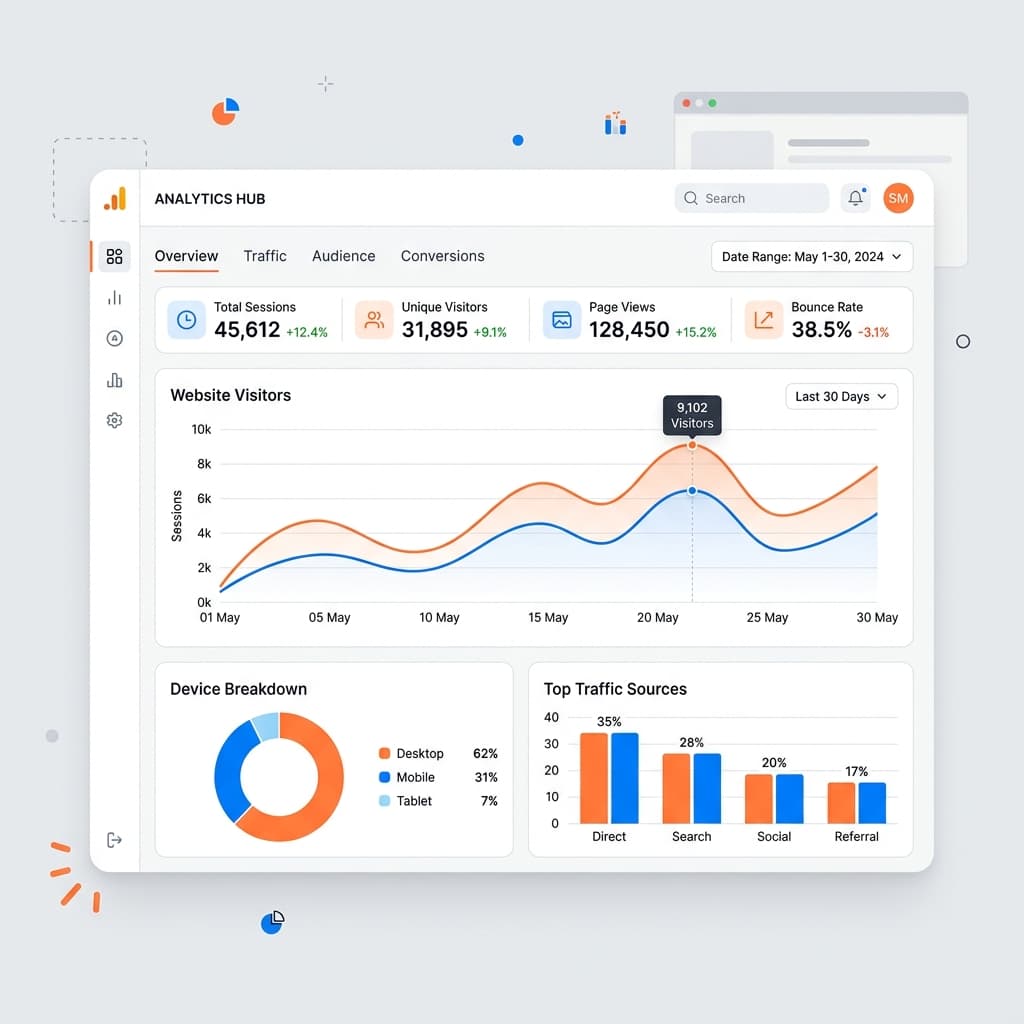
Semantic HTML & Structured schema data!
We design clean code interfaces so search engines clearly understand your pages. Structured hierarchy acts as a blueprint for indexing bots.
Google uses semantic markers to digest and segment your site content. We implement proper structural HTML5 layouts using tags like <header>, <nav>, <main>, <section>, <article>, and <footer>. Instead of rendering everything inside nested <div> wraps, we maintain a logical hierarchy: exactly one <h1> for page identity, followed by structured <h2> and <h3> tags.
Additionally, we inject structured data schemas (JSON-LD) directly into your site layout files. This explicitly details your organization info, physical coordinates, articles, services, and FAQs. Search engines parse this data to display rich search cards—boosting your organic click-through rate (CTR) directly on search engine result pages.
"@type": "Service",
"name": "Technical SEO Web Development",
"provider": {
"name": "Unnat Vega"
Strategic Internal Link Architecture!
An effective **internal linking strategy** distributes crawl authority (link juice) to high-priority services. It maps how users and search spiders discover related information across your pages.
- 01
Contextual Link Placements: Inject anchor links using specific keyword terms naturally inside body content.
- 02
Shallow Crawl Depth: Design site structures ensuring any single page is accessible within a maximum of 3 clicks from the homepage.
- 03
Breadcrumb Navigation: Enable hierarchical breadcrumb elements dynamically pre-loaded with proper schema tags for rich breadcrumb snippet results.
Link Juice Distribution
How PageRank flows to target pages
Mobile-First Responsive Engineering!
Google indexation works exclusively on mobile-first crawling. If your desktop page design looks clean but your mobile experience is slow or misaligned, you will struggle to rank.
We construct fluid, responsive grid wrappers using Tailwind. Our layouts scale gracefully down to mobile screen sizes without layout shifts. Furthermore, we make sure interactive elements like buttons, form inputs, and menu buttons satisfy accessibility guidelines with a minimum touch clickable area of 44x44px, facilitating simple navigation across mobile interfaces.
Image Optimisation & Asset Delivery!
Heavy, uncompressed images are the single biggest cause of slow load times and Cumulative Layout Shifts. We prevent these speed issues by setting up modern media processing rules.
Next-Gen Media File Conversion
We convert raw photos into compressed WebP or AVIF formats. This achieves up to 75% file size reductions compared to older JPEG or PNG structures without visible quality loss.
Strict Container Dimensions
We explicitly define image width and height parameters on the page. This tells browser rendering engines exactly how much layout space to reserve, preventing visual shifts during asset loads.
Lazy Loading by Default
Images located below-the-fold are lazy loaded automatically. The browser only requests media assets when the user scrolls near them, reducing page load times.
Compression Results
Real Performance Benchmarks!
We build search engine optimised websites that lead the industry in raw performance tests. See how our technical frameworks compare against standard web metrics.
Mobile PageSpeed Score
Desktop PageSpeed Score
Time to First Byte (TTFB)
Largest Contentful Paint (LCP)
Cumulative Layout Shift (CLS)
Interaction to Next Paint (INP)
Frequently Asked Questions!
Have questions about technical SEO and custom development? We address common queries below.
What is SEO-friendly website development?
SEO-friendly website development is the practice of designing, structuring, and coding a website so search engines can easily crawl, render, and index its pages. Rather than applying SEO as an afterthought, we bake SEO into the foundation by writing clean HTML, minimizing script bloat, securing fast load speeds, and creating logical linking architectures.
Why is a website built for SEO better than standard template builders?
Standard page builders (like WordPress plugins, Wix, or Squarespace) generate heavy, bloated source code, excessive nested DOM elements, and slow third-party scripts. A website built for SEO from scratch using modern frameworks like Next.js outputs pre-rendered, highly optimized static HTML, resulting in faster load times and significantly higher ranking potential.
How does technical SEO web development impact organic rankings?
Search engines like Google prioritize user experience. Technical SEO web development directly addresses crawler friendliness and performance. If search crawlers encounter broken code, slow servers, or layout shifts, they penalize the site. Clean technical execution makes it easy for search bots to recognize and rank your content.
What role does a website built for SEO play in Core Web Vitals?
Core Web Vitals measure loading speed (LCP), visual stability (CLS), and interactivity (INP). A website built for SEO directly optimizes these metrics through code-splitting, modern image formatting (WebP/AVIF), font preload optimizations, and minimizing layout shifting. These speed optimizations provide a positive ranking boost in Google search results.
Does your SEO website development company integrate structured schema data?
Yes. As a leading SEO website development company, we integrate structured schema data (JSON-LD) natively. This provides search engine spiders with explicit context about your business, articles, services, and FAQs, which can trigger rich snippets (star ratings, FAQ accordions, site links) in Google search results.
Ready to Build a Website That Drives Growth?
Whether you're launching a new business or redesigning an existing site, we'll build a website that looks exceptional, performs flawlessly, and delivers results.
WhatsApp Us